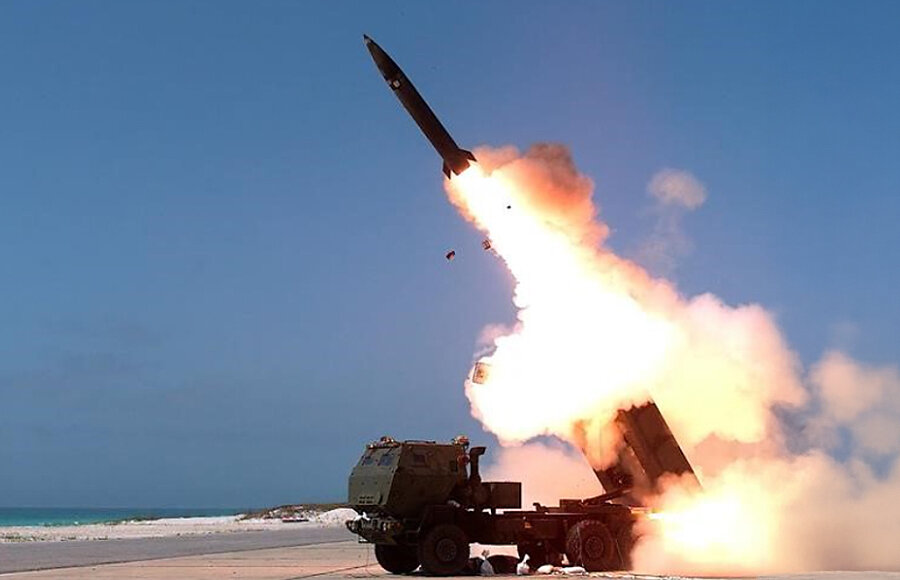
The US Air Force Research Laboratory (AFRL) and Anduril Industries have demonstrated modularity on a…
Lockheed Martin Australia to build hypersonic launch capability in Australia
Canberra-based Lockheed Martin Australia is partnering with companies and universities in Queensland, as well as the Queensland Government, to create a mobile launch platform to accelerate early-stage research, development, testing and evaluation of high-speed and hypersonic flight technologies.
Supported by a $6.38 million contract from the Queensland Government’s Sovereign Industry Development Fund (SIDF), this project will bring together Lockheed Martin Australia, Airways Trade Australia, Rocket Technologies International and the University of Queensland. Together they will construct a deployable launch rail and associated telemetry, communications and payload-assembly equipment to facilitate rapid, cost-effective flights up to hypersonic speeds.
“This capability will position Australia at the forefront of high-speed advanced aerospace technology development and will support Australian Government Defence priorities,” said Jeremy King, Chief Executive, Lockheed Martin Australia and New Zealand.
Rocket Technologies International will design and build the rocket motors for the first series of flights. Allan Payne Chief Executive, Rocket Technologies International said, “Establishing a rocket manufacturing capability in Queensland is a critical step forward for Australia’s long-term sovereign defence preparedness and industrial resilience.”
The launcher will be a highly configurable platform that can be staged at any Queensland test site, providing researchers and developers with greater flexibility and launch opportunities, says the company. Additionally, it will provide increased opportunities for land‑based recovery, complementing diagnostics gained from telemetry, leading to enhanced, faster test diagnostics.
Its key benefits, says Lockheed Martin Australia, include rapid, low‑cost testing of emerging advanced aerospace technologies, reducing time and risk prior to larger, more expensive testing campaigns. It provides Australian and international industry, academia and government with access to high‑speed test ranges across Queensland; it generates a pipeline for future low‑cost rocket boosters, starting with sub-Mach 5 systems; and it supports international collaboration with AUKUS, QUAD and other partners.
One of Australia’s centres of gravity for hypersonics research is the University of Queensland’s Eagle Farm Campus – indeed, it was Professor Allan Paul from the University who designed the SCRAMJET-powered hypersonic missile which made the first-ever flight by a SCRAMJET in 2002 at Woomera. Defence’s Science and Technology Group (DSTG) has also established its own research facilities on this campus and this is one of the headquarters of classified joint work by the US and Australian governments on hypersonics.
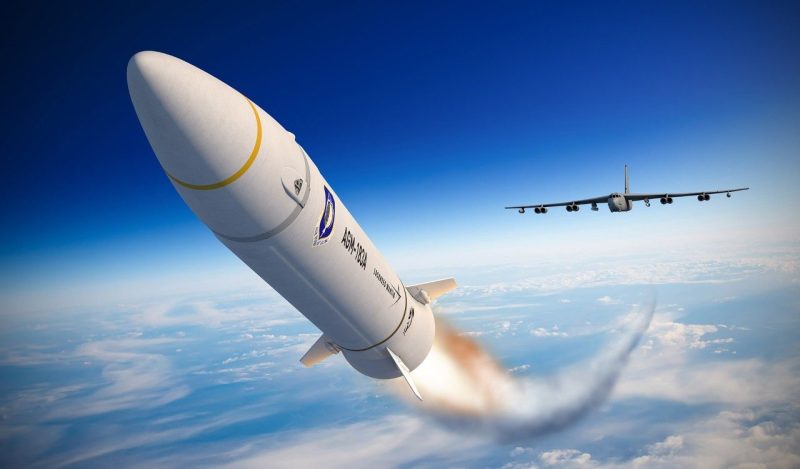
Lockheed Martin has also won a US$694 million US Air Force contract to produce the hypersonic AGM-183A Air-launched Rapid Response Weapon (ARRW) which is designed to travel more than Mach 5. Although it is air-launched rather than surface-launched, it speaks to several years-worth of hypersonic research by the company. The first aircraft to carry it will be the B-52, with which it has already been integrated.
Related Posts