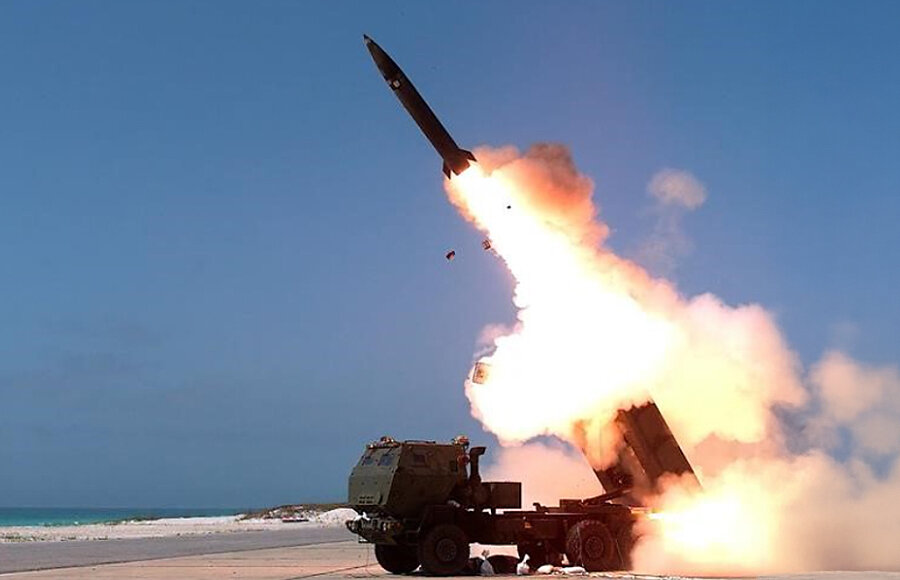
The US Air Force Research Laboratory (AFRL) and Anduril Industries have demonstrated modularity on a…

Anduril, US Navy invest US $6.6 billion to expand submarine industrial base
The US government has announced Arsenal-2, a new software-defined shipyard backed by a US$3.7 billion ($5.3 billion) private capital investment by Anduril Industries. Arsenal-2 will be built in a 2 million square foot facility at Tradepoint Atlantic in Baltimore County, Maryland, where the project will create 3,100 direct jobs and drive $2 billion in annual economic output, including an estimated $312 million in wages each year.
The facility will manufacture critical components for the Virginia-class submarine, adding significant new capacity to the US submarine industrial base in support of the Navy’s effort to increase submarine production.
The US Navy has awarded Anduril a contract of up to US$2.9 billion ($4.15 billion), with payments tied directly to demonstrated production outcomes. This contract structure ensures that Anduril, not the taxpayer, takes on the majority of the execution risk, aligning incentives to ensure on-time, high-quality submarine production, says the company. Altogether, this equates to a US$6.6 billion ($9.46 billion) investment in America’s submarine industrial base.
Virginia-class submarines are built by General Dynamics Electric Boat in Connecticut and Huntington Ingalls Industries’ Newport News Shipbuilding in Virginia in a very complex manufacturing enterprise. Meeting domestic fleet requirements and AUKUS commitments to provide three, and possibly five, Virginia-class submarines to Australia from 2032 will require substantial growth across that enterprise, including new suppliers, infrastructure, workforce, and production capacity. Arsenal-2 is intended to contribute to that expansion, says Anduril.
In parallel with Arsenal-2’s construction, Anduril is already standing up the manufacturing capabilities that will anchor operations at the new yard. Anduril will manufacture critical Virginia-class submarine components at a new 160,000-square-foot facility in Orange County, California, purpose-built to support key submarine construction processes and SUBSAFE-qualified production qualification efforts.
The Orange County facility gives Anduril a two-year operational head start to develop and validate manufacturing methods, production workflows, and quality systems before Arsenal-2 comes online. It will support prototyping and production of Virginia-class test assets and critical maritime components, including torpedo tubes, while allowing Anduril to recruit and train the early workforce on the systems and standards that will ultimately scale at Arsenal-2. Once Arsenal-2 comes online, the Orange County facility will continue supporting broader maritime manufacturing efforts across Anduril’s industrial network. This is the same approach Anduril has used at its Arsenal-1 factory in Ohio.
Arsenal-2 will build complex components and large-scale assemblies of the Virginia-class submarine and deliver them to Electric Boat and Newport News Shipbuilding for final assembly. Adding another source of this work will allow more submarine construction to happen in parallel across the industrial base and increase the overall capacity available to the Virginia-class program.
The project will create 3,100 direct jobs and support more than 10,000 indirect jobs. Permitting and site preparation will begin immediately, with construction commencing as soon as the necessary approvals are in place. Initial operations are expected to come online in 2030, with production scaling progressively thereafter as Anduril builds the workforce, supplier base, infrastructure, and manufacturing throughput required for submarine production.
ArsenalOS, Anduril’s industrial software platform, will provide the digital backbone for the yard and its production systems, says Anduril. This will connect fabrication workflows, outfitting sequences, material movement, inspection protocols, and documentation requirements in a single system, giving workers and managers real-time visibility into the state of production.
Related Posts