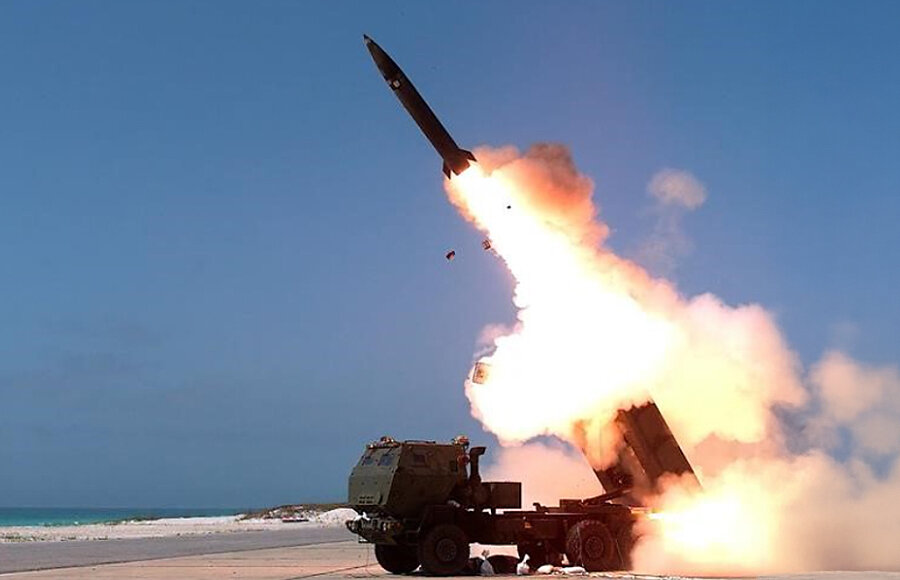
The US Air Force Research Laboratory (AFRL) and Anduril Industries have demonstrated modularity on a…

Ghost Bat to go into production
Boeing Defence Australia’s (BDA) autonomous MQ-28A Ghost Bat will be transitioned into a warfighting system for the Australian Defence Force (ADF) under a $1.4 billion program, including a $754 million contract to BDA.
Designed and built in Australia under the AIR6015 Autonomous Collaborative Platforms – Air Program, the Block 2 variant of the Ghost Bat Collaborative Combat Aircraft (CCA) also passed a major milestone when it successfully fired a Raytheon AIM-120 Advanced Medium Range Air-Air Missile (AMRAAM) air-air missile at an Australian-made Phoenix Uncrewed Aerial Target.
Operating as a loyal wingman to a Royal Australian Air Force (RAAF) E-7A Wedgetail and F/A-18F Super Hornet, the Ghost Bat destroyed the target, manufactured by Air Affairs, a subsidiary of UK firm QinetiQ, during trials at the Woomera Test Range in South Australia.
“This is the first time an autonomous aircraft has completed an air-to-air weapon engagement with an AIM-120 missile, establishing the MQ-28 as a mature, combat-capable CCA,” said Amy List, managing director, Boeing Defence Australia.
“This latest achievement proves the advantage specialized CCA platforms bring to defence forces’ mission effectiveness, delivering increased operational mass and data exchange for informed decision-making while reducing cost and crewed pilot risk.”

The Super Hornet teamed with the Ghost Bat in combat formation to provide sensor coverage, and once the Super Hornet identified and tracked the target, targeting data was shared across all three platforms, according to BDA. The MQ-28 adjusted its position and received authorization from the E-7A to engage and successfully destroy the target using the AMRAAM missile.
“This exercise demonstrates the maturity and sophistication of Boeing’s mission autonomy solution which is built on open standards and government architectures and is capable of integrating with fourth, fifth and sixth generation aircraft,” said Colin Miller, vice president and general manager for Phantom Works, Boeing Defense, Space & Security’s advanced research, development and rapid prototyping division.
“The team implemented open architectures and an advanced digital ecosystem to develop the necessary hardware, software, and mission systems required to successfully integrate, test and employ the weapon in a live, operationally relevant scenario in under eight months.”
The exercise was a collaborative effort between Boeing, the RAAF, US Air Force and industry partners, said BDA.
Boeing will deliver six additional Block 2 and a prototype Block 3 aircraft to support the development of an operational capability by 2028. The program has seen eight Ghost Bats and multiple highly capable mission payload modules produced, and a further three Block 2 Ghost Bats in final production or testing phases.
The RAAF said initially that the Ghost Bat would be an Intelligence, Surveillance and Reconnaissance (ISR) platform. The air-air missile test was foreshadowed for the first time at this year’s Avalon Airshow by Steve Parker, head of Boeing’s US-based defence and security business, and was understood then to be a Boeing event. However, the RAAF’s language has altered over the course of the year and it’s now understood that the air-air missile test was a combined Defence and Boeing event.
Both RAAF and US Navy ‘pilots’ have been trained to operate the Ghost Bat, causing speculation that the US Navy is also a potential customer for the system.
The announcement reinforces Australia’s position at the forefront of CCA technology globally, said Defence in a media release. The Ghost Bat program was unveiled at the Avalon Airshow in 2019 and the autonomous aircraft made its first flight, in Block 1 guise, in 2021. The Ghost Bat’s Vehicle Control System, which confers its autonomy, is designed and built by BAE Systems Australia in Melbourne.
“Australia is at the forefront of efforts to develop and field autonomous collaborative combat aircraft to provide asymmetric advantage and enhanced fighting depth for existing crewed platforms,” says Richard Marles, Deputy Prime Minister and Minister for Defence. “This landmark demonstration proves the MQ-28A Ghost Bat is a world-leading collaborative combat aircraft [and]… underlines its growing potential to deliver an operational capability for the Royal Australian Air Force.”
Investment in uncrewed and autonomous systems is a key priority of the 2024 National Defence Strategy. Defence is investing more than $10 billion on uncrewed systems over the next decade, including at least $4.3 billion on Uncrewed Aerial Systems (UAS). CCAs like the Ghost Bat deliver asymmetric surveillance and air combat capabilities, increasing the lethality and survivability of existing crewed platforms, says Defence.
“With Ghost Bat, the future of collaborative air combat is right here, right now,” according to Pat Conroy, Minister for Defence Industry. “Today’s announcement highlights that Australia is leading the world in the development of collaborative combat aircraft.”
The Ghost Bat is the most advanced CCA design in the world at present, say both Defence and BDA. The most significant other program of record is the US CCA program which has seen the General Atomics YFQ-42A and the Anduril Industries YFQ-44A Fury designs undergo ground and then flight tests in the USA. They both made their first flights in the second half of this year, whereas the Ghost Bat has achieved 120 flights and more than 20,000 hours of testing using a digital twin. Earlier this year two Ghost Bats flew with an E-7A Wedgetail Airborne Early Warning and Control (AEW&C) aircraft with a Mission Execution Custodian, embarked on the Wedgetail, acting as the Human on the Loop.
“The Ghost Bat transforms a single fighter jet into a formidable team—capable not only of surveillance but also of engaging adversaries,” Conroy added. “This delivers a vital layer of protection for our aviators who remain our most valuable asset.”
The Ghost Bat program supports more than 440 high-skilled jobs nationwide, including roles at Boeing Defence Australia and across more than 200 Australian suppliers – 70 per cent of program expenditure is directed to Australian industry.
Related Posts