Queensland-based aerospace companies Gilmour Space Technologies and Hypersonix Launch Systems have signed an agreement to…
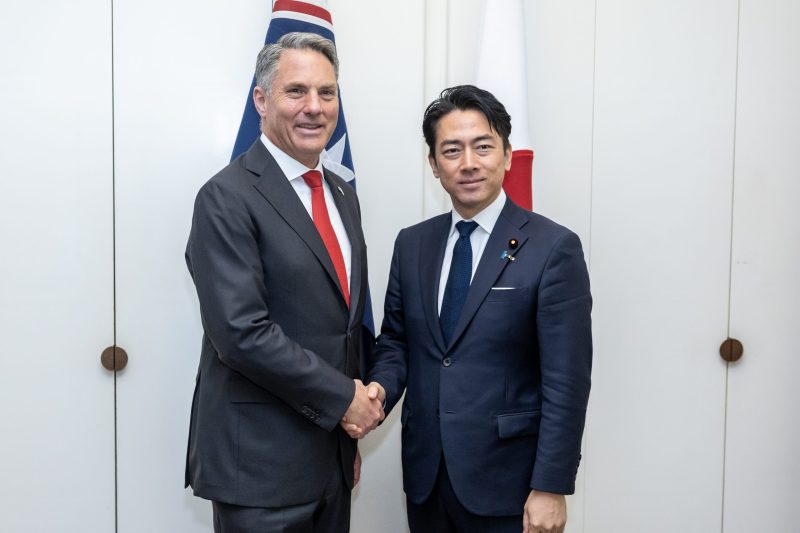
ADF and JSDF trial high energy laser
The Australian Defence Force and Japanese Self-Defense Force have successfully trialled a High Energy Laser sensor under Project Boobook at Cultana Training Area in South Australia.
Project Boobook is the first co-development project between the Australian and Japanese defence industries, demonstrating deepening cooperation between our two nations, according to a media release by Defence.
“Boobook is an Australian owl that can see very well in the dark,” said Richard Marles, Deputy Prime Minister and Minister for Defence. “Project Boobook is about an enhanced laser capability that can be put on land combat platforms as well as littoral platforms, which gives greater protection and situational awareness by using lasers to optically detect incoming threats.”
The Project saw Defence’s Science and Technology Group (DSTG) collaborate with Mitsubishi Electric Australia (MEA) and Mitsubishi Electric Corporation (MELCO). The laser system draws on more than 20 years of R&D by DSTG to deliver a cutting-edge technology with the potential to enhance surveillance capability.
“This project is not only the first co-development between Japan and Australia, but also the first case in which Japan’s defence industrial technologies have attracted the interest of a foreign government and progressed to international co-development in the defence field,” said Mizumi Shinjiro, Japan’s Minister of Defense..
“Boobook is more than a technology project,” said Pat Conroy, Minister for Defence Industry. “It is a practical example of the growing defence industrial partnership between Australia and Japan, as well as the opportunities that partnership creates for both nations.”
The Project supports the implementation of the two government’s 4 May announcement, which committed to enhanced defence and security cooperation.
The successful Boobook trials have provided valuable insights into the system’s design and technical requirements, informing the next phases of development and commercialisation, said Defence. The testing also demonstrated Australia and Japan’s ability to jointly develop advanced technologies and conduct multinational testing on Australian ranges. This paves the way for ongoing defence industrial collaboration on advanced defence capabilities between the two countries.
As the project progresses, MEA is investing some $70 million establishing new facilities at Rydalmere, New South Wales in preparation for large-scale manufacturing within Australia. This facility will become the home of a new MEA Defence Division, supporting future manufacturing opportunities in Australia and strengthening access to advanced Mitsubishi Electric defence technologies for the ADF.
“The establishment of Mitsubishi Electric Australia’s new defence facilities in Rydalmere is a strong vote of confidence in Australia’s defence industrial future and will support new opportunities for advanced manufacturing, technology transfer and workforce growth,” said Conroy.
The two Ministers also discussed Japanese use of Australian test ranges. “If the Japan Self-Defense Forces are able to conduct test launches of stand-off missiles, such as hypersonic missiles, in Australia, it would be a groundbreaking development, second only to similar cooperation with the United States,” said Minister Shinjiro. “We will therefore accelerate discussions towards realising this objective.”
Related Posts