The US Air Force Research Laboratory (AFRL) and Anduril Industries have demonstrated modularity on a…
KBR wins Defence CLCM contract
Defence has awarded a $12.5 million, three-year Capability Life Cycle Manager contract to Kellogg Brown & Root Pty Ltd for its Diving, Autonomous and Signatures System Program Office (DASSPO) portfolio.
The CLCM model is designed to provide Defence with an accountable industry partner responsible for managing a specific capability throughout its life cycle, with improved efficiency and value for money. The contract is part of Defence’s new national approach to delivering sustainment for Navy capabilities.
KBR, which in 2024 won the $130 million CLCM contract to sustain the RAN’s amphibious and replenishment fleet, will provide asset management, engineering, maintenance and supply chain services to support the Navy and Australian Army.
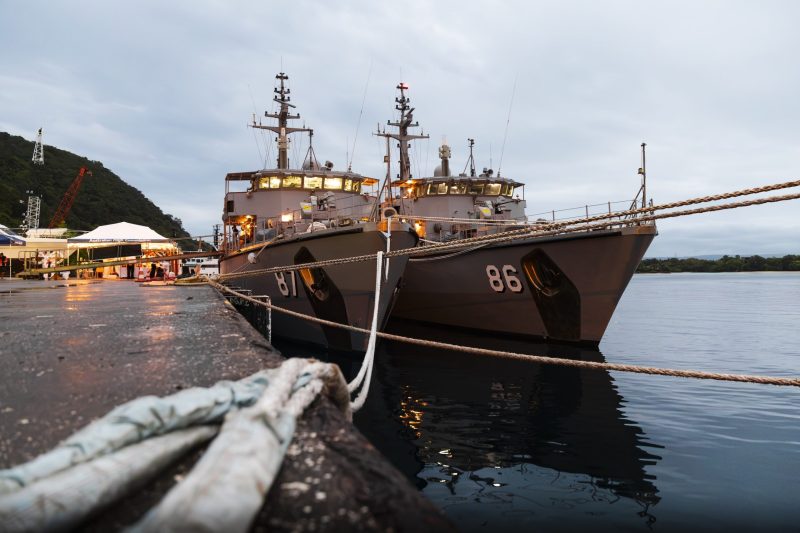
Under the new contract it will look after diving and hyperbaric systems, Huon-class minehunter coastal vessels, deployable mine countermeasures and the Sail Training Ship Young Endeavour.
“The Government is implementing fundamental reform of Defence sustainment through the maritime sustainment model, ensuring Navy capability is available when and where it is needed,” said Mr David Hanley, Deputy Secretary of Defence’s Naval Shipbuilding and Sustainment Group (NSSG).
The company has also announced that the part of KBR that won the contract, its Mission Technology Solutions business, will be spun-off by 4 January 2027 and named Trinzic. The new business, which is expected to turn over about US$5.8-6 billion, will be quoted on the New York Stock Exchange and will also have a local headquarters in Canberra.
“The conversation around autonomy has really shifted from whether an autonomous asset can deliver operational advantage to, how does Defence safely integrate, assure and validate and bring together those capabilities at scale?” says Ben Kelly, KBR’s senior director sustainment and integration. “And I think that’s the heart of what KBR will be doing.”
The company developed a system called Government Autonomous Modelling and Simulation Environment, or GAME, with the US Air Force to validate that mission autonomy software is doing what it should do. Ben says this has been transferred to Australia as a sovereign capability.
GAME could be used to compare vendors’ mission autonomy systems, or testing whether an in-service system can operate effectively against a new or evolved threat, says Kelly: “We think it’s important.”
Autonomy is not about individual systems, he says, but an eco-system operating much faster than today. “The important part is how they work together and what effect you can actually generate.”
Related Posts