The US Air Force Research Laboratory (AFRL) and Anduril Industries have demonstrated modularity on a…
UK to adopt more autonomous and robotic systems
Britain’s Armed Forces will be strengthened through a drone transformation, announced by the Prime Minister and backed by more than £5 billion in the Government’s Defence Investment Plan. In a major speech the British Prime Minister set out how new investment in defence will accelerate the use of drones and autonomous systems across the UK Armed Forces.
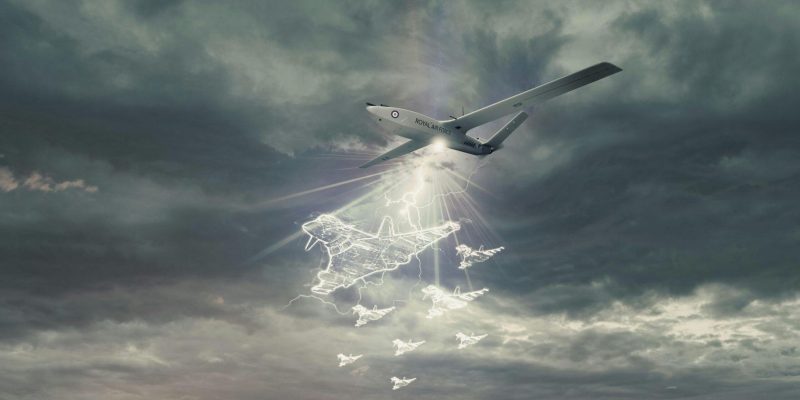
The £5 billion investment will see Britain build a flexible, integrated force with attack drones flying alongside Army helicopters, RAF jets made invisible from enemy detection with new drones, and a hybrid Royal Navy made up of crewed and uncrewed vessels.
It will also fund Europe’s biggest drone testing centre, the Uncrewed Systems Centre, opened earlier this month in Swindon, and a new Uncrewed Systems Taskforce to rapidly develop and field new autonomous capabilities with industry. This will ensure the UK can continuously scale production and get the very latest drones into the hands of our Armed Forces to protect the UK and our Allies.
The character of warfare is rapidly changing. As the conflicts in Iran and Ukraine show, drones are rapidly reshaping warfare, with cheap systems destroying high value targets and innovation cycles measured in weeks, not years. Ukraine uses roughly 200,000 drones a month to defend itself from Russia’s barbaric invasion, while at the height of the Iran conflict, 700 offensive drones were being launched per day.
This largest ever UK investment into these evolving technologies will help the UK’s Armed Forces stay ahead of their adversaries. The investment will see capabilities ranging from highly complex autonomous mine-hunting drones to small ‘quadcopter’ tactical drones, and low-cost ‘kamikaze’ one-way attack drones. The drone transformation will be accelerated across all the services:
Royal Navy
The Royal Navy is transforming into a Hybrid Navy, combining autonomous vessels and AI with warships and aircraft, including:
- Type 91: Uncrewed missile platforms to increase the firepower of the Hybrid Fleet.
- Type 92: Uncrewed sense platforms designed to hunt enemy submarines across the North Atlantic, supporting our new frigates.
- Type 93: Extra-large uncrewed underwater vessels which will work alongside crewed hunter-killer submarines to seek and destroy enemy submarines.
- Type 94: Uncrewed sense platforms designed to scan the skies for threats to the hybrid navy or the homeland.
- In the 2030s, we will expand the numbers of the above platforms and bring at least six Common Combat Vessels into service as the brain of a networked Maritime Air Defence system.
- Project PANTHEON: Development of a Hybrid Carrier Air Wing, including trialling jet-powered drones to work alongside our F-35B force.
- Our Royal Marine Commandos will benefit from further investment in their transformation, equipped with new high-speed boats and the latest drone and autonomous technology.
British Army
The British Army is increasing its lethality, including through:
- A major investment into inexpensive expendable autonomous systems and loitering munitions to enhance the lethality of the Army, including a £50 million boost over the next 12 months for the Army’s RAPSTONE programme, funding additional first person view and interceptor drones.
- Uncrewed Ground Vehicles: A new programme to rapidly develop and produce uncrewed vehicles and their associated mission systems for the Army through UK industry.
- Project NYX: Up to 24 autonomous armed drones will be operational by 2030, flying alongside the Army’s recently upgraded Apache helicopters. They will carry out reconnaissance, precision strikes, and electronic warfare.
- Project Corvus: Up to 24 surveillance drones to replace the Watchkeeper system, carrying out intelligence, surveillance, target acquisition and reconnaissance.
Royal Air Force
The Royal Air Force is transforming, investing in:
- A new, national Collaborative Combat Air programme: The development of new autonomous fighter jets which will fly alongside crewed jets, to defend the UK’s skies with a demonstrator flying by at least 2030.
- Storm Shroud system: Bring our new uncrewed electronic warfare drone into service this year.
This Defence Investment Plan is delivering the vision set out in the Strategic Defence Review and placing defence on a stronger, more sustainable footing.
The Defence Investment Plan will prioritise growing sovereign British AI and autonomous technology, drawing on the UK’s world-leading research base – collaborating with key allies and positioning Britain to export cutting-edge defence capabilities internationally.
Related Posts