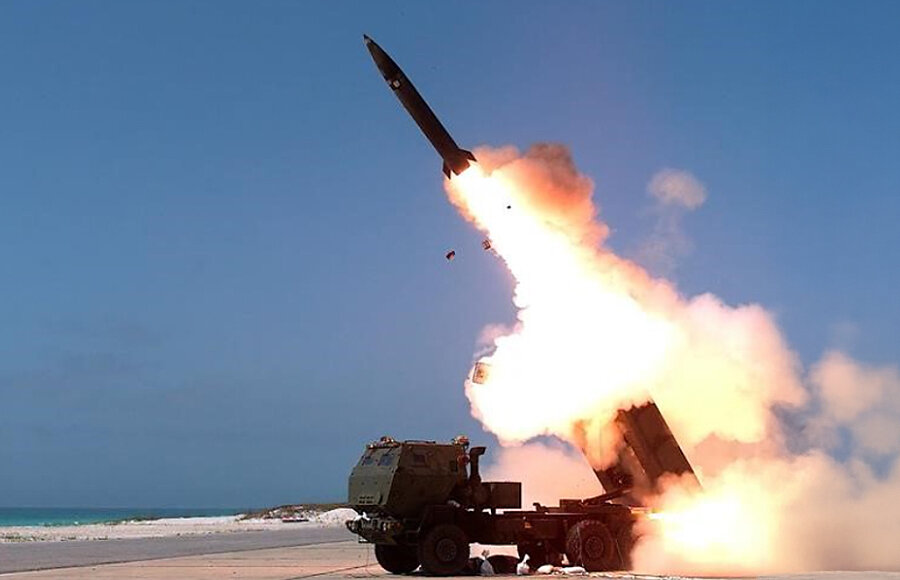
The US Air Force Research Laboratory (AFRL) and Anduril Industries have demonstrated modularity on a…

Anduril reveals Thunder Gp5 tiltrotor UAS
Californian company Anduril Industries has revealed its Thunder Group 5 tiltrotor Uncrewed Aerial System (UAS). Thunder is a hybrid-powered autonomous attack rotorcraft specifically designed to multiply the combat power and increase the survivability of current and next-generation crewed attack and assault aircraft such as the AH-64E Apache, the company says.
Thunder has the payload and open architecture required to deliver overwhelming effects for any mission, adds Anduril. It is engineered with survivability, speed and range and built on flight-proven autonomy that enables validated, high-performance teaming with crewed assets, the company says.
Modular internal main and nose payload module bays enable Thunder to host combinations of precision munitions, air-launched effects, rockets, electronic warfare payloads, counter-UAS force protection, and cargo. The UAS’s design also enables rapid integration of future mission systems. For example, Thunder’s main payload module can be configured with ten air-to-ground missiles such as Hellfire, JAGM, Barracuda-100M; sixteen launched effects such as the Altius-600; or seventy-six 70mm rockets.
Thunder can also carry an additional twelve counter-UAS effectors in the nose payload bay, providing a mix of effects to address a wide variety of threats during a single sortie.
“By pairing multiple Thunder aircraft with a single crewed platform,” says an Anduril media release, “commanders can achieve a step-change in combat mass that enables formations to defeat more targets, sustain operations longer, and keep crews farther from the most lethal threats.
“By teaming three Thunder aircraft with each Apache, for example, a Combat Aviation Brigade will achieve a three times increase in available munitions without placing additional pilots in harm’s way, all at a fraction of the cost of a similarly-sized formation of exclusively crewed aircraft.”
Thunder’s tiltrotor configuration combines Vertical Take-Off and Landing (VTOL) with efficient wingborne cruise, enabling runway-independent operations from austere locations without the range constraints of traditional rotorcraft, points out the company.
Thunder was co-developed with civilian aerospace company Archer Aviation and is the defence-specific variant of a dual-use platform. The design brings the commercial VTOL sector’s rapid innovation in electric propulsion and rotor design directly into defence, says Anduril.
A series hybrid-electric powertrain enables Thunder to achieve significant range and endurance, while still maintaining the necessary precision to closely optimize power through the full range of flight conditions. Meanwhile, Optimum-Speed Tiltrotors (OSTR) vary rotor RPM to maintain efficiency across flight regimes, reducing power demand and fuel burn in cruise and minimizing acoustic signature to enhance survivability during low-altitude ingress.
This configuration, says Anduril, provides Thunder with the range necessary to support global self-deployment. It can also be packed into a standard shipping container for transport by air, road, rail, or sea, offering the multi-modal transport logistics required to reach any fight.
Anduril says it has already completed multiple test flights with full-scale surrogate aircraft; Thunder’s first flight is planned for 2027.
Related Posts