Australia has signed a new Security and Defence Partnership with the European Union. Australian Prime…

Australia, UK partner on guided weapons R&D
Australia’s Defence Science and Technology Group (DSTG) has signed the Copperhead Project Arrangement (PA) with the United Kingdom’s Defence Science and Technology Laboratory (Dstl). This will bring together cutting-edge technologies from both countries to develop affordable, next-generation guided weapons systems, according to DSTG.
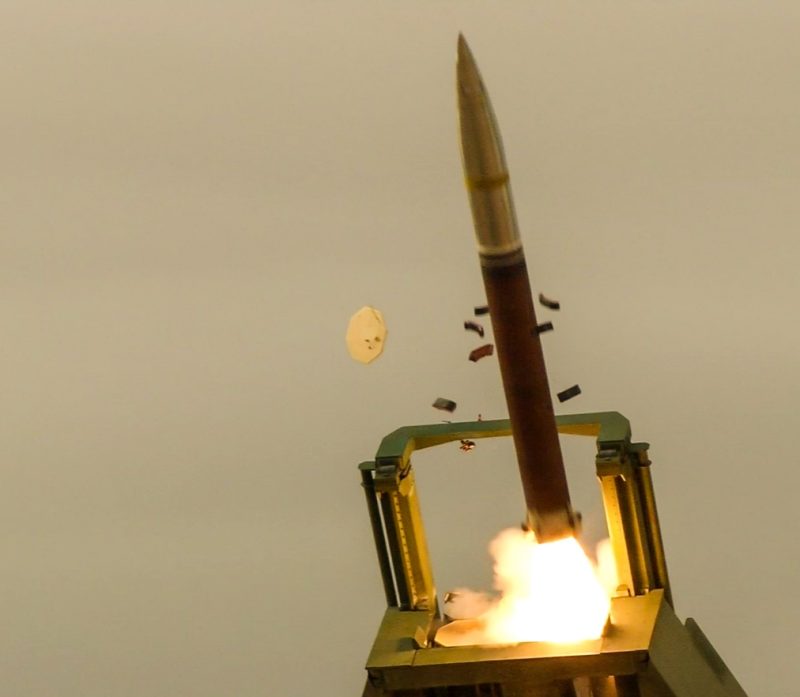
Copperhead leverages Australia’s existing Sharktooth missile technology and combines it with the United Kingdom’s Modular Weapons Testbed, capitalising on both nations’ shared expertise to bring concept to capability faster, DSTG added.
The Copperhead PA was signed in February 2025 and aims to accelerate weapons development with innovative ‘plug and launch’ modular technology to deliver advanced, yet low-cost, guided weapons subsystems.
Led by DSTG, Sharktooth is a small guided-missile project that enables rapid integration of components like sensors, warheads, guidance systems and propulsion units.
DSTG Research Leader Dr Michael Sharp said ‘plug and play’ modular technology offers the ADF an effective and agile response to evolving threats and countermeasure on the battlefield.
“The pinnacle of which could be ‘plug and launch’ enabling the soldier in the field to adapt to the mission at hand by combining weapon components or a mix of weapons,” Dr Sharp said. “The disruption that this offers over more conventional weapons approaches has the potential to confer asymmetric advantage, contributing to a strategy of deterrence.”
The PA will also grow sovereign manufacturing capability through Research and Development (R&D), central to the Guided Weapons and Explosive Ordnance (GWEO) Plan to deliver the Government’s Future Made in Australia agenda. Under the GWEO R&D program, the Australian Government has invested nearly $60 million for domestic industry to partner with DSTG on GWEO sub-systems and technologies.
Copperhead will boost this effort by driving new Australian defence industry bases in sub-systems where there is currently limited or no capability in Australia, DSTG says. For example, it will support the creation of future capabilities including rocket motors and propulsion modules, modular warheads and fuzes, advanced seekers and innovative guidance, navigation and control technologies.
DSTG is already working on its Advanced Rocket Motor Technology Demonstrator (ARMTD) as part of its Rapid Prototyping Initiative. The aim of the ARMTD Program is not to build a specific type of rocket motor but to establish, upskill and demonstrate an exemplar, sovereign supply chain that can be leveraged to manufacture whatever advanced, military-relevant SRMs Defence chooses to build in-country.
“The agreement expands our ability to leverage new technologies from a more diverse range of industry partners and will speed development by integrating technology for test and evaluation in weapons-realistic test beds,” Dr Sharp said.
Chief Defence Scientist Professor Tanya Monro said Copperhead combined the strengths of DSTG and Dstl to deliver asymmetric advantage in a deteriorating strategic environment.
“Our ability to deliver advanced defence capabilities is underpinned by international partnerships like this one, enabling game-changing ideas and cutting-edge science to be developed with speed into capabilities that provide the ADF an advantage,” Professor Monro said.
Related Posts