Australia has signed a new Security and Defence Partnership with the European Union. Australian Prime…

Northrop Grumman Australia puts down a SRM marker
Canberra-based Northrop Grumman Australia has raised its hand as a potential manufacturer in Australia of Solid Rocket Motors (SRMs) for the guided weapons Australia plans to manufacture in-country. The company is vying with several competitors to establish an Australian Rocket Motor Manufacturing Complex (RMMC) – L3Harris, teamed with Queensland Based NIOA; Anduril Industries; Sydney-based Thales Australia and Brisbane-based Black Sky Aerospace are all rivals.
However, Defence which plans to invest $22 million over three years in the RMMC, has not yet decided where it will be, nor even whether it will be government-owned or contractor-owned, according to Northrop Grumman Australia’s Country Executive, Rob Denney. Defence has issued so far only a Request for Information (RFI) and not a Request for Tender (RFT) for the RMMC.
Defence has, however, named Lockheed Martin Australia as its industry partner for the manufacture of up to 4,000 Guided Multiple Launch Rocket System (GMLRS) missiles a year by 2029 and an undisclosed number of Precision Strike Missiles (PrSM) of all four current Increments for the Royal Australian Artillery’s 14 Regiment. The missiles will be built at a $316 million Australian Weapons Manufacturing Complex (AWMC) whose location should be disclosed before the end of this year. The AWMC will probably also manufacture other weapons.
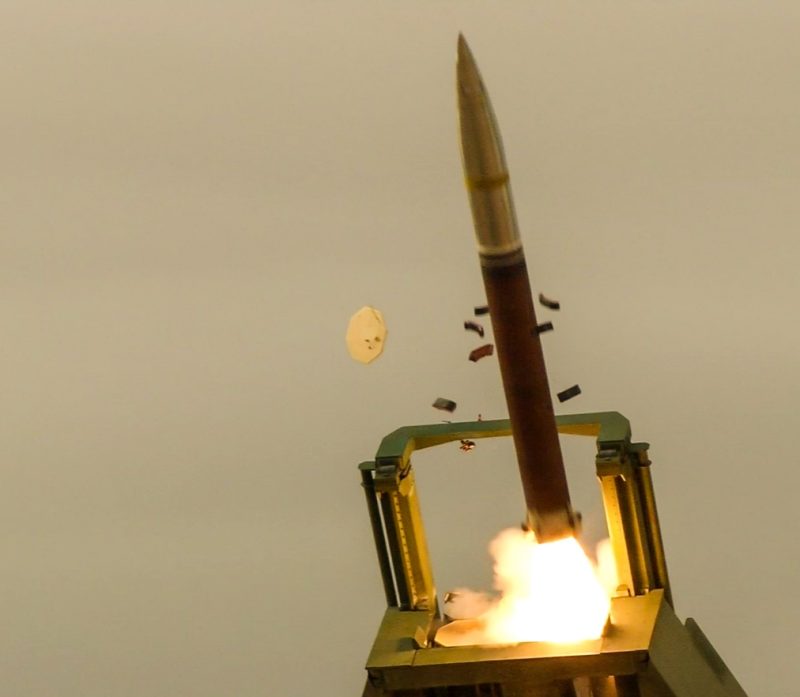
The Australian Army has test-fired both GMLRS and PrSM in Australia from Lockheed Martin High Mobility Artillery Rocket System (HiMARS) launchers, the latter in July this year.
The Australian Army is far more advanced in selecting its industry partner for the AWMC, said Frank Morley, a Northrop Grumman Vice President and Regional Executive. It still has a way to go selecting its RMMC partner, but Northrop Grumman can build SRMs in-country by 2029, he added: “We’re ready to go when Australia is ready to go, and that’s what we’re communicating to them.”
Northrop Grumman manufactures SRMs for 16 separate US weapons and programs, says Morley, and has invested heavily in the past three years to increase its capacity. A few years ago the company was producing almost 5,000 SRMs annually. “We’ve expanded that to about 10,000 a year currently. We’re looking at 13,000 annually and we’re on track to double that again, up around 29,000 before the end of the decade.”
One of the company’s big SRM production facilities in the USA is in West Virginia, and Northrop Grumman has both expanded the facility there and built a new one alongside to meet growing demand.
Just a few years ago the company was building 3,500 GMLRS SRMs a year, Morley adds: “We ramped that up to about 7,500 a year now, on our way to 10,000 by the end of the year.” That’s almost the current capacity of Lockheed Martin’s East Camden, Arkansas, plant where the GMLRS, PrSM and HiMARS are built and which aims to produce 12,000 GMLRS rounds this year.
However, Lockheed Martin and Sydney based Thales Australia signed a teaming agreement last September to “explore opportunities to advance the development and production of SRMs for the Australian market”, they said in a statement. Thales Australia operates Defence’s ammunition mixing plant at Mulwala and its ammunition filling plant at nearby Benalla and is Strategic Partner of the GWEO Enterprise.
The purpose of the agreement is to collaboratively qualify and produce GMLRS Solid Rocket Motors and other components in support of Defence’s Guided Weapons and Explosive Ordnance (GWEO) Enterprise. The partners say the teaming agreement will focus on producing an Australian SRM System, as well as exploring supply chain options to establish Australian industrial capability for related components.
The choice of SRM contractor and RMMC location is solely down to Defence.
Australia’s intent to manufacture 4,000 GMLRS and GMLRS-ER rounds a year by 2029 matches Northrop Grumman’s ambitions, says Morley. The company is the primary or sole supplier across the mostly US-supplied family of weapons that the ADF operates, so it adds vital capacity to the company’s production lines.
“So we’re in discussions with government on that,” he told media in Canberra. “We’re pretty excited.”
There’s enlightened self-interest in building SRMs in Australia, adds Denney: “It’s about getting capabilities that otherwise we couldn’t get access to at the volume and the price.”
The company has proven in the USA that it can manufacture multiple different SRM types at a single facility, says Denney, and this is the heritage it is offering Australia: “We have developed all the intellectual property for how to develop SRMs. And that’s not just how to mix solid rocket motor fuel and pour it into a solid rocket motor,” he says. “How do you set up your factory? Where do you put the components? What skills do your people need? How do they develop? How do you develop them from being junior workers to becoming supervisors?
“It turns out producing solid rocket motors is rocket science,” Denney says.
Related Posts