The US Air Force Research Laboratory (AFRL) and Anduril Industries have demonstrated modularity on a…

US soldier plans and executes autonomous Black Hawk missions
For the first time, a US soldier, not a trained aviator, has planned and executed real-world missions in military exercises with Lockheed Martin Sikorsky’s Optionally Piloted (OPV) Black Hawk helicopter, powered by MATRIX™ technology.
In partnership with the Joint Personnel Recovery Agency and the Defense Advanced Research Projects Agency (DARPA), Sikorsky fielded the OPV Black Hawk aircraft at EX Northern Strike 25-2 in August to demonstrate, in an operational environment, how an autonomous Black Hawk can expand mission reach and reduce risk to soldiers, the company says.
A US Army National Guard Sergeant First Class was trained in less than an hour to independently plan, command and execute OPV Black Hawk missions using the system’s handheld tablet. He directed the payload to a location 70 nautical miles away and commanded multiple precision airborne drops, marking the first time OPV Black Hawk operated fully under the control of an actual warfighter, instead of a trained test pilot or engineer, according to Sikorsky.
At EX Northern Strike the OPV Black Hawk also demonstrated three types of cargo delivery, including internal carry, external sling load and precision parachute drop, as well as a MEDEVAC exercise.
From a Coast Guard boat on Lake Huron, a soldier planned and executed a Class 1 resupply mission from 70 nautical miles away. After the cargo was unloaded, says Sikorsky, he used the tablet interface to direct the OPV Black Hawk in racetrack patterns over the lake while soldiers onboard completed two precision parachute drops at different altitudes. It was the first time the OPV Black Hawk had performed precision logistics and airborne drops entirely under soldier control, the company adds.
The OPV Black Hawk also completed its first-ever autonomous hookup of an external load while airborne, the company says. Using its hover stability capabilities, the aircraft held position while soldiers quickly attached a 2,900lb water tank without pilot intervention. The demonstration showed that a MATRIX-equipped aircraft can perform complex aerial resupply missions in the field.
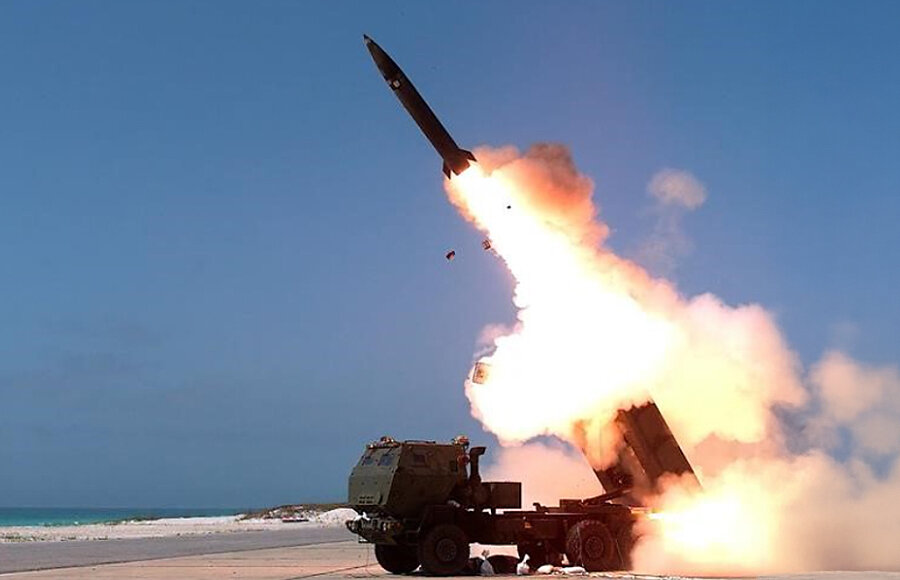
The OPV Black Hawk also completed six autonomous hovering hookups to transport HIMARS launch tubes to an alternate landing zone, Sikorsky says. A soldier then used OPV Black Hawk to conduct a simulated personnel recovery, including a tail-to-tail patient transfer to a piloted Black Hawk at an unimproved landing site. This was the first time an untrained soldier commanded an autonomous MEDEVAC recovery from inside the OPV Black Hawk aircraft.
Sikorsky’s MATRIX technology, leveraged to support DARPA’s Aircrew Labor In-cockpit Automation System (ALIAS), gives operators control of advanced aviation, a capability once reserved for trained pilots, says Sikorsky. This enables resupply, personnel recovery and contested logistics missions in dangerous or low-visibility areas without putting human life at risk.
Related Posts