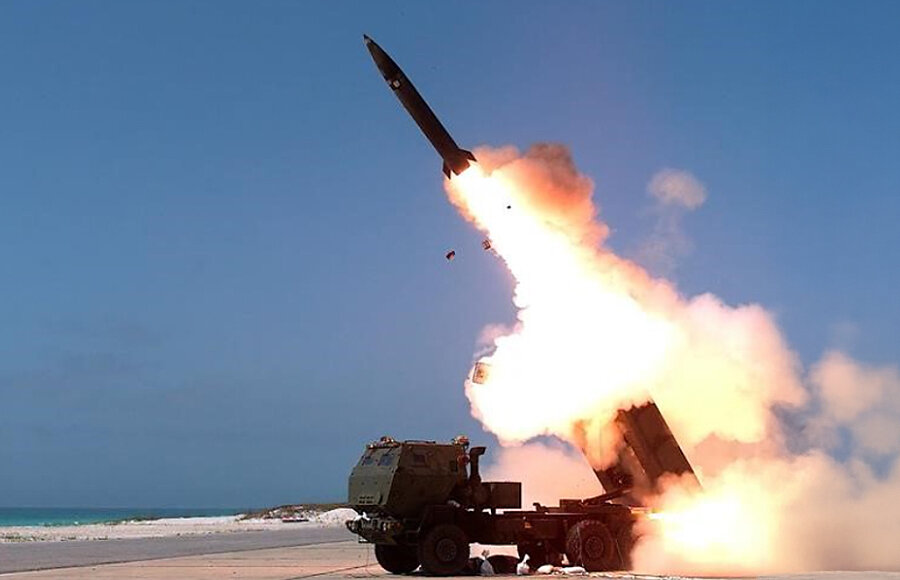
The US Air Force Research Laboratory (AFRL) and Anduril Industries have demonstrated modularity on a…

US and Australia re-coat Space Surveillance Telescope
US defence contractor L3Harris Technologies has completed a major mirror refurbishment for the US Space Force’s Australian Space Surveillance Telescope (SST) at the Harold E Holt Naval Communication Station in Exmouth, Western Australia. This critical milestone ensures one of the most advanced ground-based space surveillance systems remains fully mission-ready, the company said in a media release.
The 3.5m SST, which is operated by the RAAF’s 1 Space Surveillance Unit, achieved Final Operational Capability (FOC) last year and provides the Australian Defence Force (ADF), United States forces and allied nations greater awareness of artificial objects orbiting Earth.
The ADF and the USAF agreed to relocate the SST to Exmouth in 2013 under JP9360 to enhance coalition space domain awareness capability and improve coverage in the region.
The ADF’s Head of Space and Cyber Capabilities, Rear Admiral Andrew Quinn, said the SST had undergone a rigorous test and evaluation program to assess its performance as a space domain awareness sensor.
“A critical component to the SST reaching FOC was the establishment of a $17 million Mirror Recoating Facility, co-located with the telescope,” he added. “The Mirror Recoating Facility, built by Australian industry, will allow Defence to maintain and recoat the SST mirrors on site, keeping it at peak performance throughout its operational life.”
The SST provides wide-area detection and tracking of objects in geosynchronous orbits, roughly 22,000 miles (about 35,400km) above Earth, ranging from operational satellites and debris to potential hazards and emerging threats. Completing this high-precision maintenance extends the telescope’s operational life and safeguards a capability the US Space Force relies on to maintain space domain awareness as orbital congestion and adversary activities accelerate.
“SST is a cornerstone capability for protecting the nation’s space assets,” said Jeff Hanke, President, Space Systems, L3Harris. “This milestone ensures US Space Force operators continue to receive the precise, reliable sensor performance they need to detect threats, avoid collisions and defend the space infrastructure our military, economy, and citizens depend on.”
The upgrade required the careful removal, restoration, and enhancement of SST’s primary and tertiary mirrors – the optical core that enables long-range detection and accurate object tracking. The primary mirror underwent a full refurbishment, including stripping, cleaning and recoating using a custom-built Vacuum Deposition System. The tertiary mirror received specialized cleaning to meet enhanced coating standards, along with structural repairs to its support hardware. Together, these upgrades restore and improve the telescope’s optical performance, ensuring continued accuracy and reliability.
Related Posts