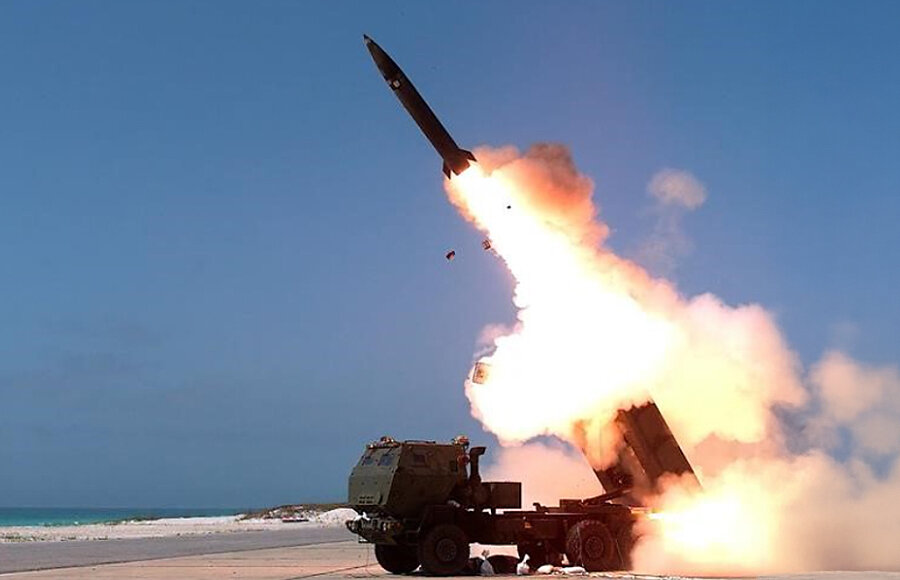
The US Air Force Research Laboratory (AFRL) and Anduril Industries have demonstrated modularity on a…

THEY’VE DONE IT! Hypersonix launches DART AE on hypersonic flight
Brisbane-based Australian hypersonic flight pioneer Hypersonix Launch Systems has successfully completed the first flight of its DART AE hypersonic aircraft, marking a major milestone in the development of advanced hypersonic systems.
The mission, titled That’s Not A Knife, lifted off from Rocket Lab Launch Complex 2 within the Virginia Spaceport Authority’s Mid-Atlantic Regional Spaceport on Wallops Island, Virginia, aboard Rocket Lab’s HASTE launch vehicle.
The flight was conducted under the Hypersonic and High Cadence Testing (HyCAT) program of the Department of War’s Defense Innovation Unit (DIU). The DIU selected Hypersonix in 2022 over 63 other contenders for the testing of hypersonic platforms and components, sensors for detecting and tracking, and systems for communications, navigation, guidance and control.
The DIU wanted a vehicle capable of maintaining speeds above Mach 5 with a manoeuvrable/non-ballistic flight profile and at least a 3-minute flight duration with near-constant flight conditions. DIU also wants the flights to be repeated at short intervals.
Hypersonic flight refers to speeds above Mach 5; Hypersonix is also developing a new class of autonomous hypersonic aircraft capable of sustained flight up to Mach 12.
Its flagship DART AE is a 3.5-metre, 3D-printed autonomous hypersonic aircraft made from nickel-chromium Inconel alloy. It is powered by the company’s air-breathing SPARTAN scramjet (supersonic combustion ramjet) engine which is made from Ceramic Matrix Composites (CMCs), to handle even higher temperatures, and uses liquid hydrogen which burns cleanly while allowing for significantly faster and longer sustained flights.
The DART AE and SPARTAN technology were developed by Dr Michael Smart, co-founder of Hypersonix, former Chair of Hypersonic Propulsion at the University of Queensland and a former NASA research scientist.
The SPARTAN engine is 3D-printed, reusable and capable of reaching Mach 12 with no moving parts, Hypersonix says. Unlike conventional scramjets powered by kerosene, SPARTAN produces zero CO₂ emissions and offers a reusable, low-maintenance solution for a range of high-speed defence and aerospace missions.
During the mission, HASTE carried DART AE to the planned deployment point in the upper atmosphere. DART AE then executed its hypersonic mission, gathering invaluable technical data for the team to analyse in the coming weeks.
The mission confirmed years of technical work, said Dr Smart.
“This mission allowed us to test propulsion, materials and control systems in real hypersonic conditions,” he explained. “At these speeds and temperatures, there is no substitute for flight data. The results from this mission will directly shape the design of future operational hypersonic aircraft.”
Hypersonix CEO Matt Hill said the successful mission represents a defining moment for the company and for Australia’s advanced aerospace capability.
“This flight reflects years of focused engineering work and the confidence placed in us by our partners,” Hill said. “Successfully flying DART AE in a true hypersonic environment confirms that an Australian company can design, build and operate technology in one of the most demanding flight regimes on Earth. It is an important step toward delivering hypersonic systems that are operationally relevant for Australia and its allies.”
The successful mission follows Hypersonix’s recent $46 million Series A funding round, backed by Australia’s National Reconstruction Fund Corporation and Queensland Investment Corporation. The round was led by High Tor Capital, a UK investor in national security and frontier technology, with European defence company Saab and Polish family office RKKVC also supporting the raise.
The funding is accelerating Hypersonix’s flight test program, expanding advanced manufacturing capability in Queensland and fast-tracking development of the company’s next hypersonic platform, the 8m-long, Mach 12 VISR (Velos Intelligence, Surveillance and Reconnaissance), which will also be manufactured from CMCs. Hypersonix currently employs more than 50 people in Brisbane across aerospace engineering, advanced manufacturing and testing roles.
Related Posts