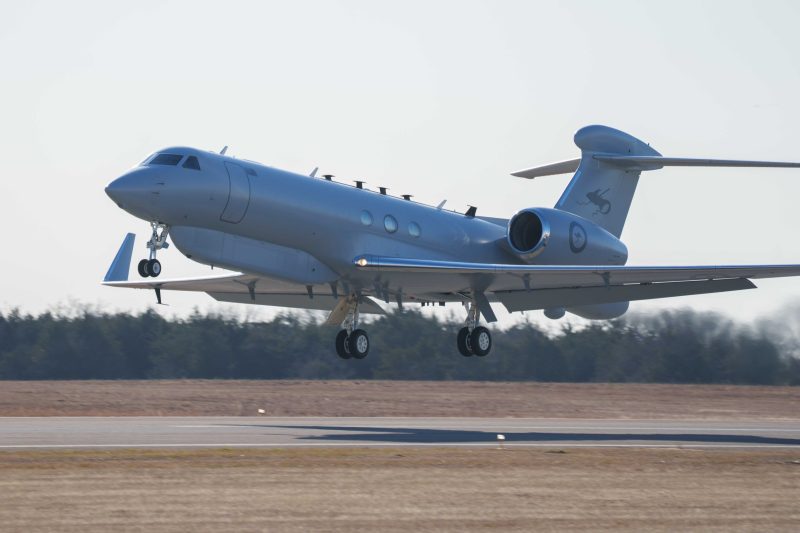
US defence prime contractor L3Harris Technologies has delivered the first of four MC-55A Peregrine aircraft…
Army tests counter-drone technology
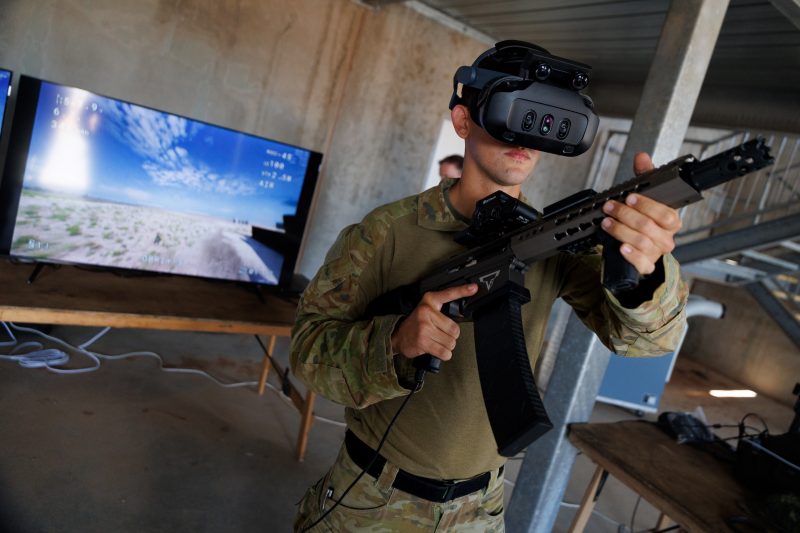
The Australian Army has tested Counter small Uncrewed Aerial System (C-sUAS) capabilities acquired under Project LAND156 at its Cultana Range urban training facility in South Australia. EX Southern Arrow 25 the Army culminated in a successful live-fire demonstration.
This was the first iteration, according to Defence, of the LAND156 Integrated CUAS Acquisition, Refresh and Upgrade Schedule, or ICARUS, featuring a Command and Control (C2) system integrated with multiple sensors and effectors. In August last year Leidos Australia was named prime contractor for Project LAND156; a swag of Australian companies including Acacia Systems, DroneShield, EOS Defence Systems, Department 13, Echodyne and L3Harris have all been selected for this project.
Drones, or UASs, posed the most fundamental threat to forces that militaries had seen in a long time, says LTCOL Josh Mickle of CASG’s Land Capability Division. Pat Conroy, the Minister for Defence Industry, said Defence has set aside $1.3 billion for the acquisition of C-UAS capabilities over the next 10 years, highlighting the strategic importance of this domain and of Project LAND 156.
“It is an asymmetric threat, the technology advances at an extremely fast rate, and the counter measures to those drones must keep up,” said LTCOL Mickle.
This version includes the DART RF detection system and EchoGuard active radar, Vampire rocket launcher, R400 Slinger armed with an M134D mini-gun, and MAG-58 and M230LF 30mm cannon mounted on Hawkeye vehicles.
“Countering drones is not an air defence problem, it is an everybody problem, and what we saw was the future of force protection,” LTCOL Mickle said. “It is an asymmetric threat, the technology advances at an extremely fast rate, and the counter measures to those drones must keep up. This is a developmental project and we are moving extremely fast.”
To integrate advanced sensors and effectors into a combat management system to neutralise the Category 1 and 2 UAS threat is an impressive undertaking, he added. “The team that has been able to pull this together in an extremely quick time is nothing short of remarkable.”
The ICARUS demonstration was the culmination of an intense period of testing and evaluation, which Army says will continue in 2026.
“Over the past six to eight weeks the project has been conducting evaluations and assessments of the best dismounted systems in the world to find the best of the best, that we can introduce rapidly,” Lieutenant Colonel Mickle said.
“We’ve taken into account technical assessment, cyber assessment and soldier usability assessment, to identify the most suitable systems that we will acquire more of. We’ll be training the dismounted forces on these systems from early 2026.”
Related Posts