Queensland-based aerospace companies Gilmour Space Technologies and Hypersonix Launch Systems have signed an agreement to…

Thales Australia selected by Airservices Australia to carry out drone surveillance trials at Sydney airport
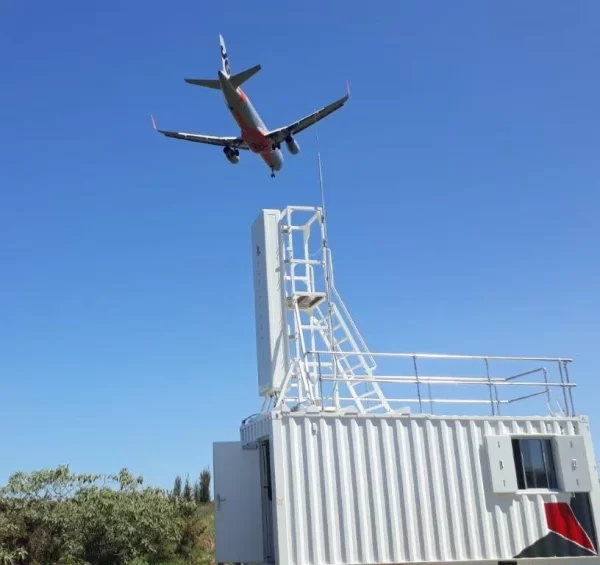
Australia’s Air Traffic Management provider Airservices Australia has chosen Thales Australia as its primary system integrator for an Integrated Drone Surveillance System (IDSS) trial at Sydney Kingsford Smith Airport. Thales is already prime contractor on the joint civil/defence OneSKY upgrade of Australia’s Air Traffic Management (ATM) system.
The system of systems provided by Thales for the IDSS program integrates the company’s advanced drone surveillance solution, several sensors and an advanced command and control system to classify, recognise and identify potential threats in airspace around aerodromes.
“Airservices, in partnership with Australian Government agencies, implemented drone detection capabilities at major airports across Australia several years ago,” said Peter Curran, Chief Customer Experience and Strategy Officer, Airservices Australia. “As uncrewed aircraft technologies continue to evolve and increase in use, we are investing in solutions that keep pace with latest developments. Our partnership with Thales allows us to trial next-generation drone detection capabilities to enhance the safe operation of crewed and uncrewed flights operating together in Australian airspace.”
At the core of the system is a 3D holographic radar system, used at international airports around the world including the United Kingdom, South-East Asia and Oceania. It was chosen for its safety, reliability, and ability to detect and classify all types and sizes of drones.
The trial will begin later in 2022 at Sydney’s Kingsford Smith Airport, one of the busiest in the world.
Thales’ solution uses a multi-layered sensor approach and advanced command and control for the detection, monitoring and identification of drones, as well as being able to pinpoint the location of the drone pilot. The entire system provides a comprehensive picture of the airspace in real time around the airport. At the core of the system is a radar, designed to detect, track and classify small, slow, low UAVs from the smallest remote-piloted drones to more sophisticated autonomous drones, in particular for the glide path where the biggest risk exists.
Since its launch in 2019, the solution has been deployed at several airports around the world in Europe, America and Asia.
“We have demonstrated our ability to be a strong player in the field of airport air surveillance and anti-drone systems and our 3D holographic radar system solution is becoming a ‘game changer’ in protecting aircraft from rogue drones whilst maintaining airport operations,” said Christophe Salomon, Thales’s Executive Vice President Land and Air Systems.
“This is an exciting new opportunity on trial in Australia that proves the consistency of our strategy by ensuring the safe and secure application of a drone-based economy, whilst increasing opportunities to drive efficiency and financial benefits to a large proportion of Australian businesses in the future.” Chris Jenkins, Chief Executive, Thales Australia & New Zealand.
Related Posts