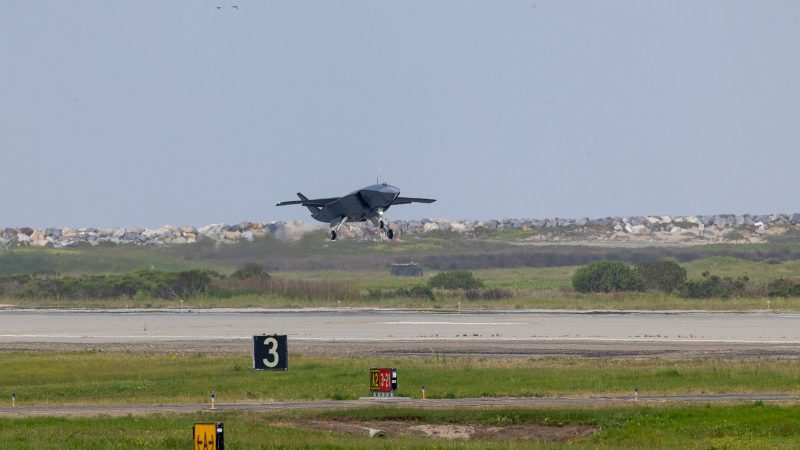
The MQ-28A Ghost Bat has completed three operational flight tests on the Point Mugu Sea…

Australia and UK revive Defence Industry Dialogue
The defence industry ministers of Australia and the UK, Pat Conroy and Luke Pollard, have agreed that Australia will host British engineers and scientists at Woomera to watch ongoing trials of the MQ-28A Ghost Bat Uncrewed Aerial System (UAS) and explore the prospects for further trials in the UK.
And the UK will explore applications for Canberra firm CEA Technologies’ CEAFAR and CEAMOUNT Active Electronically Scanned Array (AESA) radars, which already equip the RAN’s seven ANZAC-class frigates and will equip its six Hunter-class Anti-Submarine Warfare (ASW) frigates.
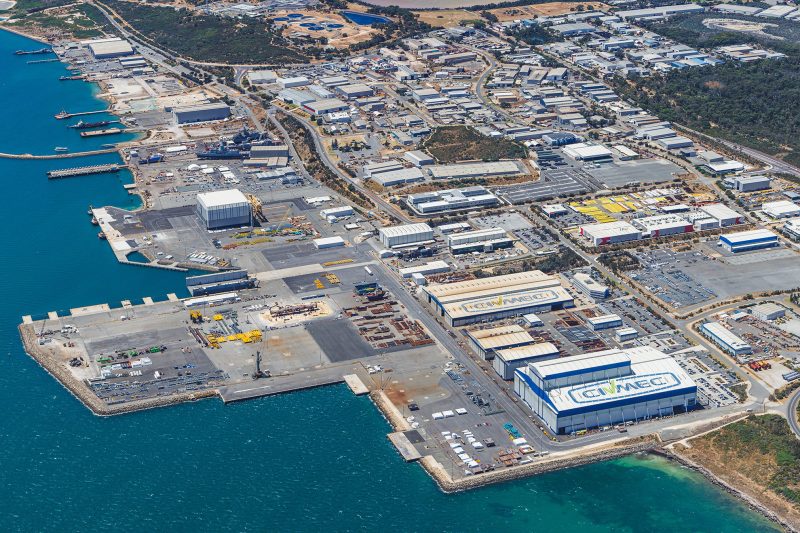
The announcements were made the week after the nuclear-powered Astute-class submarine HMS Anson docked at Fleet Base West in Western Australia for maintenance. They were part of the Joint Statement by the two governments on the Australia-UK Defence Industry Dialogue (AUKDID) in London, the first time it had been held since 2018. The revival of the Dialogue followed the 2025 Australia‑UK Ministerial Consultations (AUKMIN), with both parties recognising its importance as a dedicated forum to advance defence industry cooperation, strengthen collective industrial capability, and support delivery of AUKUS.
“There were critical outcomes from the dialogue,” Pat Conroy told reporters after AUKDID. “They include deepening cooperation on advanced radar technology, including exploring the use of Australian radar technologies on UK projects; increasing cooperation on collaborative combat aircraft, especially looking at payload integration of UK weapons into the MQ-28A Ghost Bat; strengthening work on directed energy or laser weapons.
“We’re also supporting UK weapon testing of systems destined for Ukraine on Australian ranges,” he added.
CEA Technologies leads the world in AESA radar technologies, said Conroy, “So, we’ve committed to exploring how these advanced radars can be integrated into UK platforms.”
Defence is also looking at expanding integration of Ghost Bat into the European family of weapons – this will potentially facilitate exports of Ghost Bat to European nations who might be interested in it, said Conroy. “We’ve demonstrated that it can fire AMRAAMs, so that means that it’s attractive for countries that use this US family of weapons. If we can demonstrate successful test-firing of European weapons, then that will obviously make it more attractive to European nations.
“At the moment it is one of only two collaborative combat aircraft that have successfully fired a missile,” he said.
The two ministers also agreed to strengthen and advance cooperation on Directed‑Energy (DE) weapons and software-enabled planning systems for improved joint operational planning. The UK has its own DE weapons program, DragonFire, while Australia has several High Energy Laser Weapon (HELW) programs currently under way.
They agreed to strengthen cooperation on building resilient energetics supply chains and supplying both munitions and energetics – Solid Rocket Motors and warheads – to the UK. The ministers also discussed cooperation on critical minerals essential to advanced defence technologies, including ensuring access to strategically important materials.
Noting the importance of their respective steel industries for the delivery of SSN-AUKUS, the Ministers agreed to explore options that maximise opportunities to strengthen the two countries’ collective steel industrial base.
Ministers also agreed that Australia and the United Kingdom will work together to improve frictionless defence trade between both nations, including accelerating efforts to address barriers to collaboration such as mobility, security clearances, and cyber security standards – including for AUKUS.
Related Posts