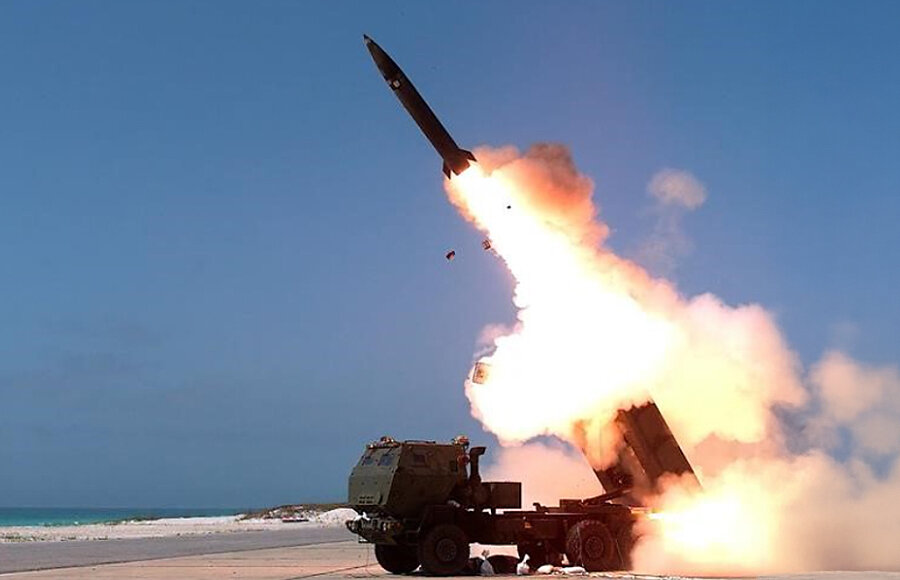
The US Air Force Research Laboratory (AFRL) and Anduril Industries have demonstrated modularity on a…

Lockheed Martin completes Block 8.1.1 upgrade for Australia’s C-130J-30 fleet
Lockheed Martin has completed the Block 8.1.1 upgrade for the Royal Australian Air Force’s (RAAF) C-130J-30 Super Hercules fleet under Project AIR5440. This will be the final upgrade before the current fleet of 12 C-130J-30s is replaced at the end of 2027 by 20 new-build aircraft in Block 8.1.2 configuration.
The Block 8.1.1 upgrade contains software and hardware expansions that provide the RAAF with improved communications and navigation; it also includes datalinks, integrated satellite voice communications and new High Frequency (HF) radios, says Defence. The C-130J-30 has a 15-foot extension to the fuselage of the evergreen Hercules and can carry eight, rather than six, 463L cargo pallets and up to 128 passengers; its maximum payload, according to Lockheed Martin, is 22 tonnes.
The first aircraft was upgraded in the USA and the remaining 11 will be upgraded in Australia, says Lockheed Martin Australia.
“Delivering 11 of 12 Block 8.1.1 upgrades here in Australia is a clear demonstration of the deep and highly sophisticated C-130J sustainment capability we have established with our industry partners locally,” said Nicole Davidson, C-130J program manager, Lockheed Martin Australia. “This achievement reflects the strength of our industry partnerships and showcases the value of a sovereign industrial base that can deliver advanced capability upgrades for the Royal Australian Air Force’s C-130J fleet.”
The Block 8.1.2 avionics equipping the new-build aircraft will give the RAAF the most capable C-130Js in the world, a C-130J/MC-130J hybrid, says Lockheed Martin. The avionics suite will include an AN/AAR-47 missile warning system, a L3Harris WESCAM MX20 Electro-Optic/Infrared (OE/IR) turret in the aircraft’s nose, a Northrop Grumman AN/ALQ-251 Radio Frequency Countermeasures (RFCM) suite, Night Vision Goggles (NVGs) and NVG-compatible lighting for night operations in both the cockpit and main cabin, and an extra crew station on the flight deck. However, like the current C-130J the aircraft will not carry a navigator and flight engineer.
The RAAF C-130J-30s is longer than the standard-length MC-130J, Lockheed Martin adds. The RAAF plans to use each of its C-130J-30s in all potential roles, so all of them will be equipped to carry out both special forces-type operations as well as routine line-haul operations.
As a member of the C-130J Super Hercules Joint User Group (JUG), Australia plays a key role in shaping and developing the Super Hercules Block Upgrade Program which is driven by the JUG. Lockheed Martin says the Block 8.1 software has been adopted by, among others, the US Air Force, Marine Corps and Coast Guard; Norway, France, Germany and New Zealand.
The RAAF’s C-130J-30s are assigned to 37 Sqn at RAAF Base Richmond, near Sydney. The upgrade Block 8.1.1 upgrade was carried out by Airbus Australia Pacific with other Australia-based suppliers also helping sustain the aircraft.
Related Posts